
Four tones, one language
Tones are the first thing most people hear about Mandarin, and often the first thing that makes them nervous. The idea that the same sound can mean completely different things depending on how you pitch your voice feels strange if you have only spoken European languages.
But here is what nobody tells you at the start: tones are learnable, they follow clear patterns, and native speakers are usually quite good at understanding beginners who are still getting them wrong. Getting them roughly right early on matters. Getting them perfect takes time, and that is fine.
This article explains what each tone is, gives you real examples, and tells you what to focus on as a beginner.
The four tones
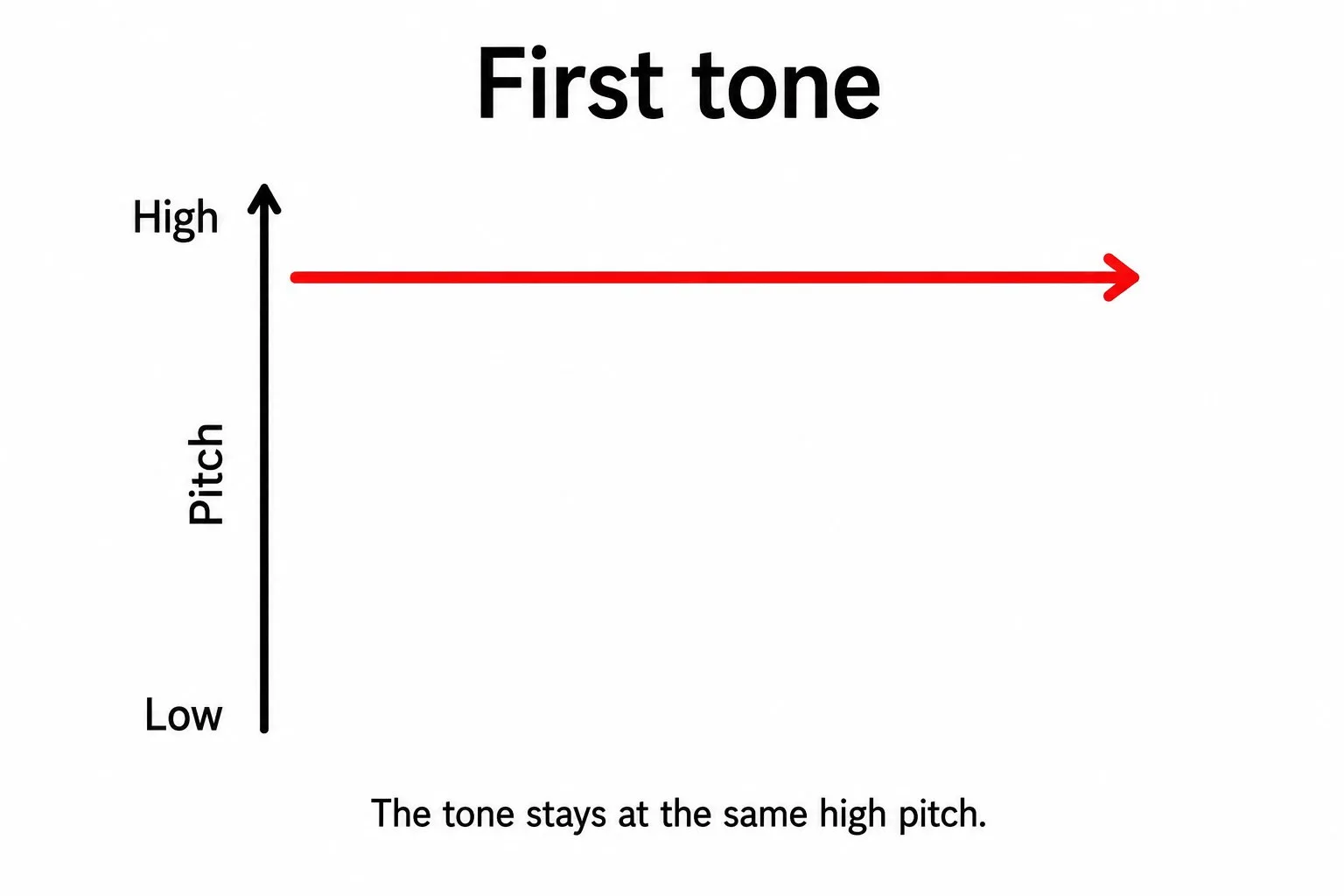
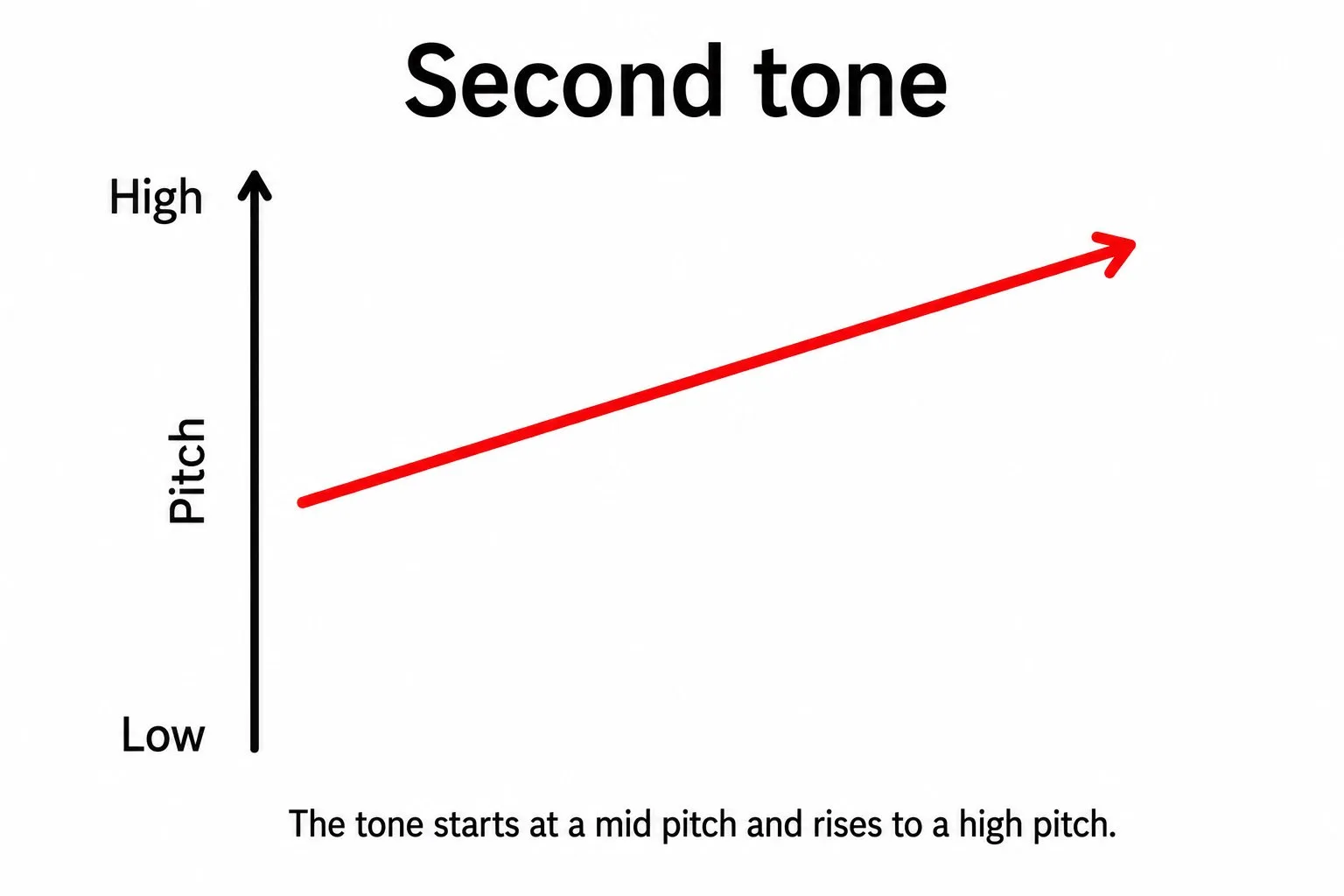
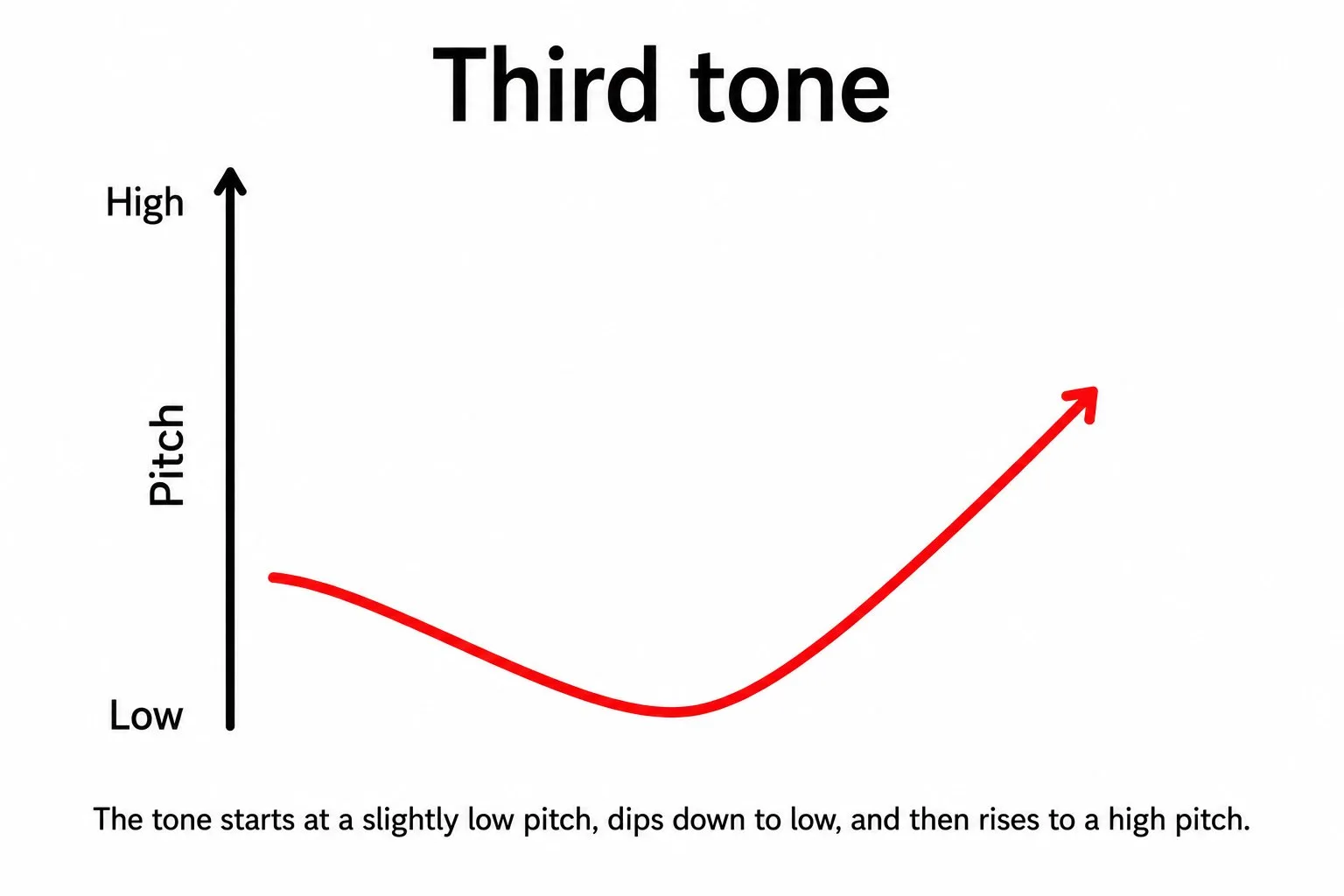
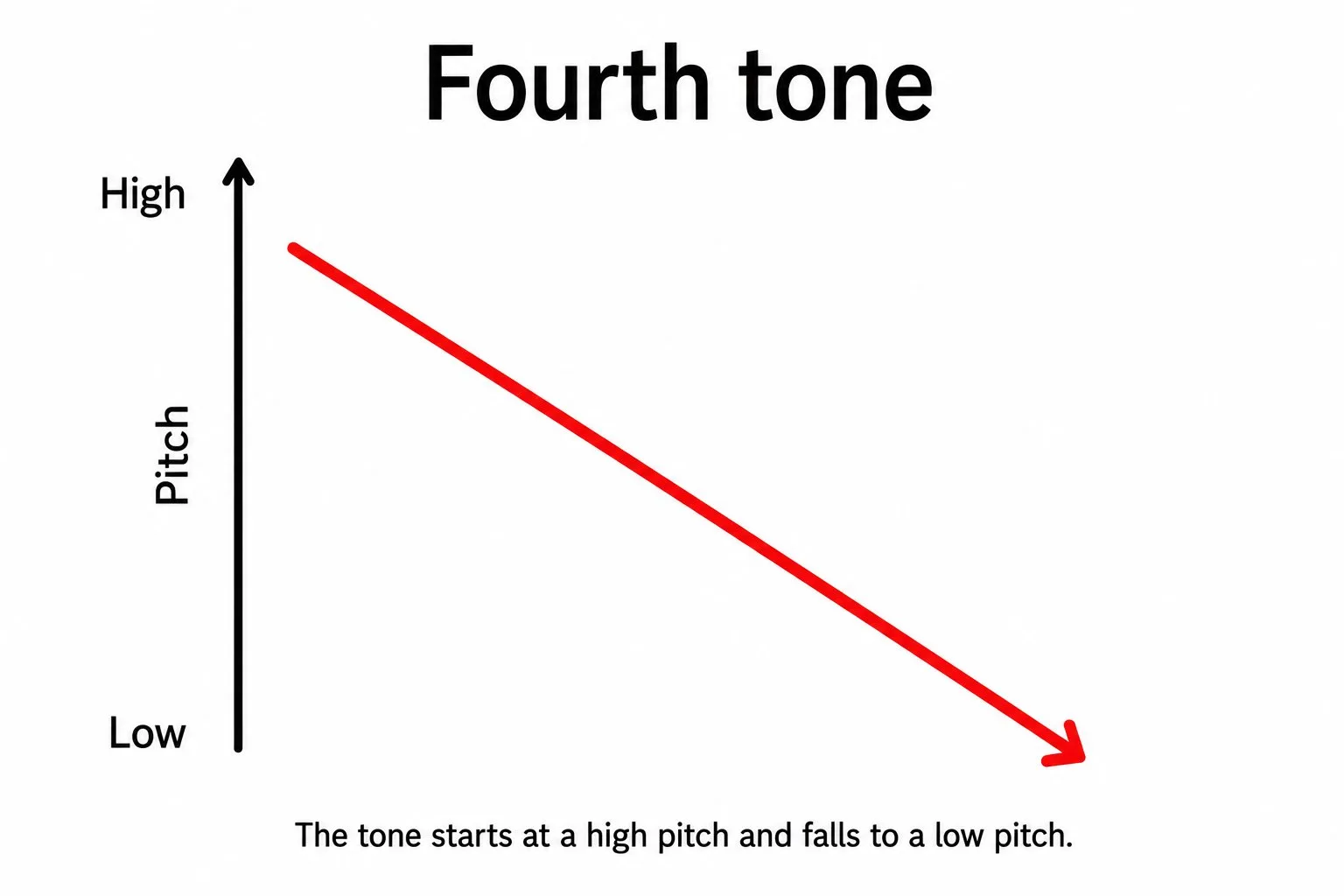
Each tone has a number (1 to 4) and a diacritic mark that appears over the vowel in pinyin. Learning both is important: textbooks and dictionaries use the marks, but people often refer to tones by number in lessons and conversation.
The neutral tone
There is a fifth option, called the neutral tone. It is short, light, and unstressed, with no diacritic mark. You will mostly encounter it in sentence-final particles and in the second syllable of certain compound words where the tone softens in everyday speech.
Why tones matter more than you think
Native speakers will often understand you from context even with imperfect tones. But Mandarin has a large number of homophones, and some mix-ups are genuinely confusing, or worse.
| Character | Pinyin | Meaning |
|---|---|---|
| 买 | mǎi (T3) | to buy |
| 卖 | mài (T4) | to sell |
| 问 | wèn (T4) | to ask |
| 吻 | wěn (T3) | to kiss |
| 请 | qǐng (T3) | please / invite |
| 情 | qíng (T2) | emotion / feeling |
| 水 | shuǐ (T3) | water |
| 睡 | shuì (T4) | to sleep |
The buy/sell pair is a practical one worth knowing early. Saying you want to 买 (buy, Tone 3) something versus 卖 (sell, Tone 4) in a market is a real distinction that matters. Tone 3 dips; Tone 4 falls sharply from high.
How to actually learn them
Reading about tones helps you understand them. Producing them consistently is a different skill and takes repetition with feedback. Here is what works:
Never memorize a word without its tone. 马 is not just "ma", it is "mǎ." If you learn vocabulary without tones attached, you will have to re-learn everything later.
Your ear needs to get used to tones before your mouth can reliably produce them. Podcasts, short videos, and lessons with a native speaker all help calibrate your hearing.
Beginners understate tones because exaggerating feels unnatural. Do the opposite: make Tone 1 obviously high and flat, make Tone 4 sharply falling. Native speech is more subtle, but your ear and mouth need the clear signal first.
Apps can tell you whether a sound matches a recording. A teacher can tell you why your Tone 3 sounds like a Tone 2 and what to change. There is no substitute for a native speaker listening and correcting in the moment.
Tone changes: when tones shift
Tones do not always stay as written. Two common rules that every beginner needs to know:
Two Tone 3s in a row
When two Tone 3 syllables appear consecutively, the first changes to Tone 2. So 你好 (nǐ hǎo, hello) is written with two Tone 3 marks, but sounds like Tone 2 + Tone 3: "níhǎo." You will hear this immediately once you know to listen for it.
不 (bù) before Tone 4
不 (bù, not) is normally Tone 4, but directly before another Tone 4 word it shifts to Tone 2. So 不是 (bù shì, is not) sounds like "bú shì." This happens automatically in natural speech.
The four mistakes most beginners make
In isolation, Tone 3 dips and then rises. In connected speech it almost always just dips. Practising the full dip-and-rise for every Tone 3 syllable in a sentence sounds unnatural and slows you down.
First tone is high and held. Many beginners cut it short because holding a high flat pitch feels strange. Keep it steady and sustained, especially when practising single words.
Both involve the pitch moving. The key difference: Tone 2 only goes up. Tone 3 goes down first. If your Tone 3 sounds like a question, you are producing Tone 2.
When learning a difficult new word, it is easy to focus on the sounds and forget the tone. Always learn tone and syllable together as one unit, never separately.
Tones and the HSK exam
Tones appear directly in HSK listening sections, where you must distinguish between words that differ only by tone. They also matter in every speaking exercise, where incorrect tones make answers ambiguous. From HSK 3.0 Level 1 onwards, tones are tested from the very beginning.
Students who work on tones consistently from their first lesson score noticeably better on listening comprehension than those who try to catch up later. The listening brain needs time to get used to tone distinctions, and that time cannot be compressed at the last minute before an exam.
Free: HSK 1 Vocabulary List
All 150 HSK 1 words with tone marks, pinyin and English. A practical reference to use alongside your tone practice.
Where to start
Do not try to perfect tones before moving on to vocabulary and sentences. That approach leads to paralysis. Learn tones alongside real words from your very first lesson. Every time you learn a new word, you learn its tone. Every time you practice a sentence, you pay attention to the tones in it.
Tones become intuitive faster than most beginners expect, but only with real spoken feedback early. Reading pinyin helps. Having a native speaker correct you in real time helps far more.
- Learn tone marks with every new word, never separately.
- Practise the four tones on single syllables before combining them in sentences.
- Pay attention to tone changes (T3+T3, 不 before T4) from the start.
- Exaggerate in practice. Natural subtlety comes later.
- Get a native speaker to correct your tones as early as possible.